A Man Found a Viking Treasure in His Garden: 7 Archaeological Discoveries of 2026 You Missed

Imagine digging the foundations for a new patio and hearing your shovel strike something metallic.
Now imagine reaching into the soil and pulling out Viking jewellery, silver bars and coins that had been buried for more than 1,000 years.
That is exactly what happened in Rebild, northern Denmark, in one of the most astonishing archaeological discoveries reported in 2026.
But the Viking hoard is only the beginning. From a Bronze Age city on the Kazakh steppe to a Roman shipwreck off Sicily, archaeologists have uncovered evidence that is changing what we know about ancient trade, technology, religion and daily life.
Here are seven archaeological discoveries from 2026 that deserve more attention.
1. Denmark’s largest Viking silver hoard was found in a garden
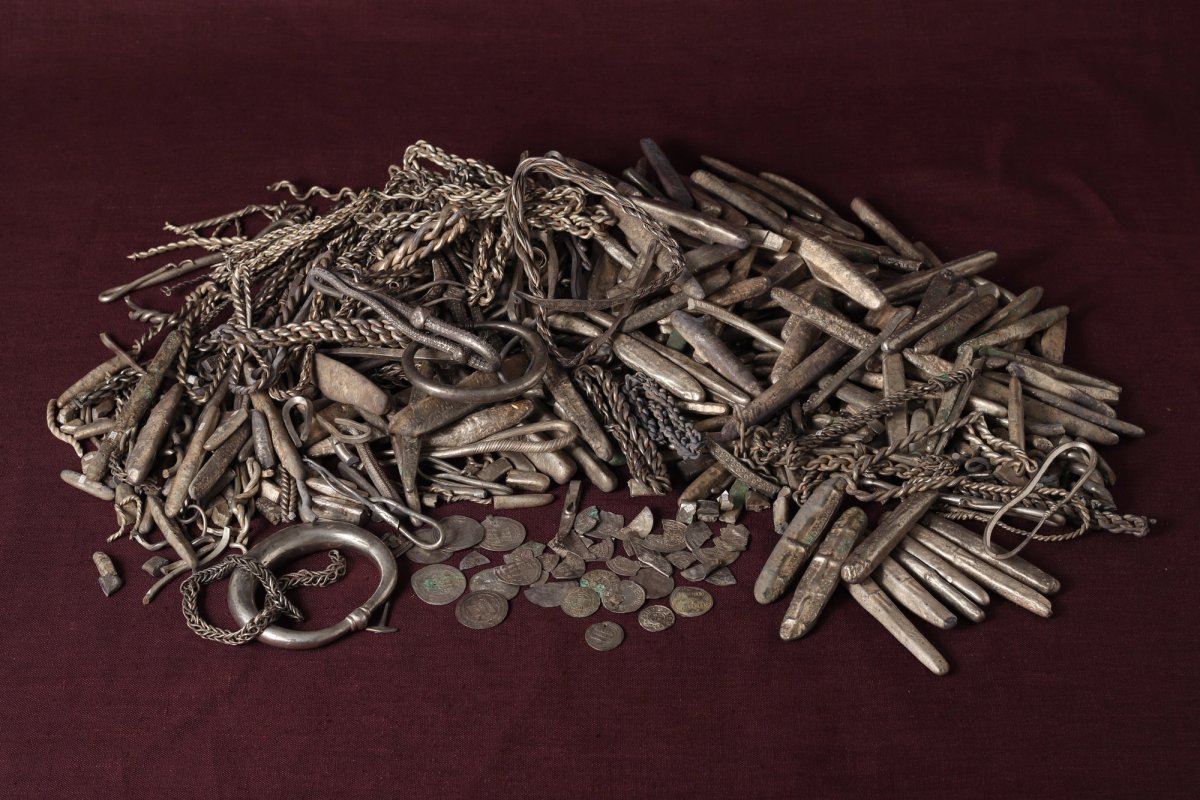
The discovery began with an ordinary home improvement project.
A man in Rebild was digging for a new terrace when his tools struck something unusual. After removing some soil by hand, he began finding one silver object after another.
The final hoard contained roughly 700 Viking Age objects and fragments, weighing almost 18.5 kilograms in total.
The finds include:
- Silver bars and cut pieces of silver
- Bracelets and other jewellery
- Forty-seven complete coins and coin fragments
- A small Thor’s hammer pendant
- A clay vessel that originally held some of the objects
- A silver bar marked with possible runic writing
The hoard dates to the 10th century, a period when Denmark was undergoing major political and religious change. It was also a time of expanding trade networks linking Scandinavia with Britain, continental Europe and the Islamic world.
The hoard is nearly three times heavier than the previously recognised Danish record-holder, the Terslev Hoard, which contained about 6.5 kilograms of silver.
Confirmed: North Jutland Museums describe the find as Denmark’s largest known Viking Age silver hoard.
Interpretation: Archaeologists believe the mixture of coins, jewellery and weighed silver reveals how Vikings treated silver as both money and stored wealth. It may have belonged to a wealthy trader, a powerful household or a group safeguarding its valuables during an uncertain period.
However, there is no evidence that the treasure belonged personally to King Harald Bluetooth. Its possible connection to Harald comes from the wider historical setting. The hoard may eventually be displayed at Fyrkat, the Viking ring fortress associated with the king.
Read the detailed report from The Art Newspaper, or see the announcement from North Jutland Museums.
2. A huge Bronze Age city appeared on the Kazakh steppe
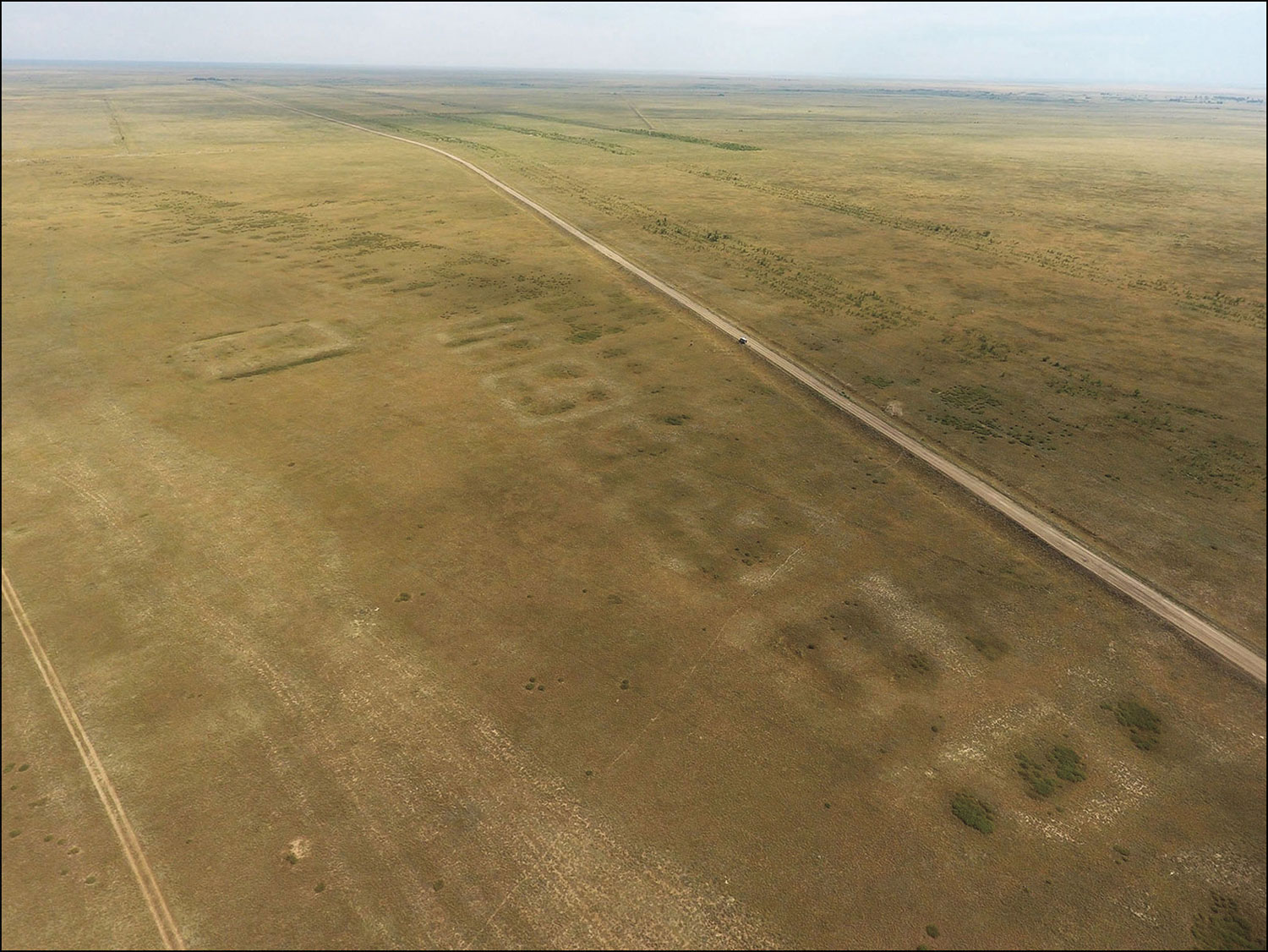
For a long time, the Bronze Age societies of the Eurasian steppe were often described as highly mobile communities.
A 2026 archaeological survey has complicated that picture.
Researchers identified the remains of Semiyarka, a settlement covering about half a square mile in modern Kazakhstan. Dating to around 1600 BC, it is described as the largest Bronze Age city yet found in the Kazakh steppe region.
The site contains long rows of rectangular earthen mounds and evidence of large-scale metal production.
Confirmed: The settlement was large, organised and connected to metalworking.
Interpretation: Its size suggests that some steppe communities were more settled, coordinated and industrially focused than older models assumed. It may have functioned as a regional centre where people produced metal goods, managed resources and exchanged materials across long distances.
The discovery is important because it challenges the simple idea that ancient steppe societies were only nomadic herders. Their way of life may have been much more varied.
Archaeology Magazine describes the discovery of Semiyarka here.
3. Old Kingdom tombs were uncovered at Aswan
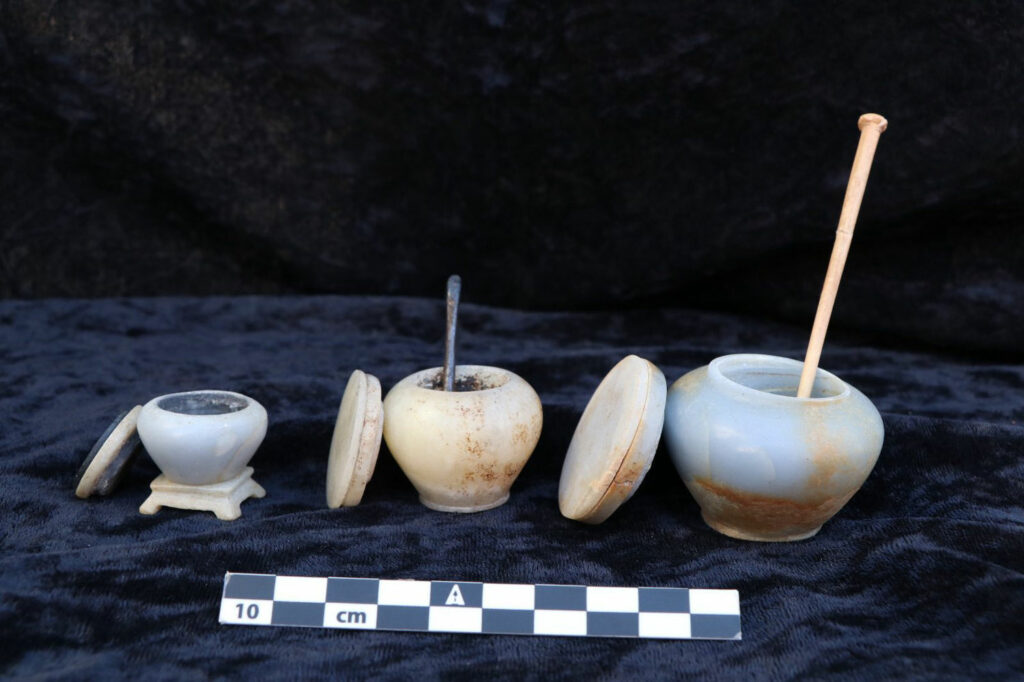
Egypt continues to produce discoveries that seem almost impossible to believe.
At the Qubbet el-Hawa necropolis near Aswan, archaeologists uncovered rock-cut tombs dating to Egypt’s Old Kingdom, roughly between 2649 and 2150 BC.
The tombs contained burial shafts and chambers. Some were reused during later periods, including the First Intermediate Period and the Middle Kingdom.
Among the finds were approximately 160 pottery vessels bearing hieratic inscriptions. These vessels may have been used to store liquids and grains. Archaeologists also recovered bronze mirrors, alabaster kohl containers, bead necklaces and Middle Kingdom amulets.
Confirmed: The tombs and their associated objects provide evidence of repeated use of the burial landscape over many centuries.
Interpretation: The finds may help researchers understand the elite families who lived along the southern frontier of ancient Egypt, as well as how funerary sites were reused and adapted by later generations.
One of the most fascinating details is that the tombs were not simply forgotten after their original occupants were buried. Later communities returned to the area, placed new objects there and gave the ancient landscape fresh meaning.
Read the report from the Archaeological Institute of America.
4. An ancient coastal observatory may have tracked the sky in Peru
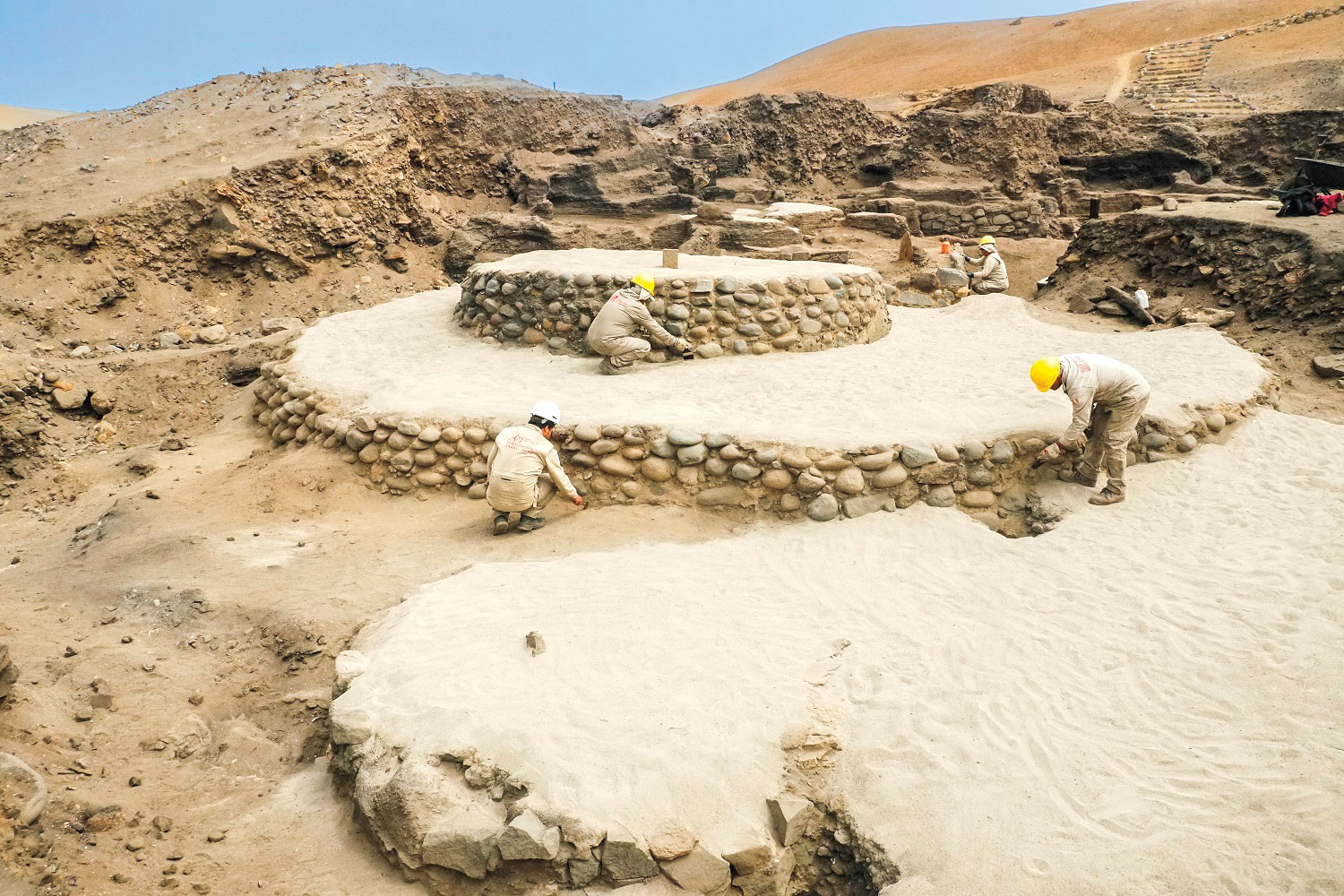
At Áspero, a coastal settlement connected with the ancient Caral civilisation, archaeologists identified an unusual architectural complex made up of circular stone platforms.
The Caral culture flourished between approximately 3000 and 1800 BC, making it one of the oldest known complex societies in the Americas.
Researchers believe the newly identified structure may have been used to observe the movements of the sun, moon and stars.
Confirmed: The site contains carefully arranged circular platforms associated with the ancient settlement.
Interpretation: The astronomical observatory explanation remains a scholarly interpretation rather than an absolute fact. If correct, it could mean that Áspero’s inhabitants used the sky to anticipate seasonal changes, plan fishing activities and manage coastal resources.
This is a good example of how archaeologists work. A building does not come with a label explaining its purpose. Researchers combine its shape, position, orientation and relationship to nearby structures to develop the most likely explanation.
Archaeology Magazine reports on the Áspero complex here.
5. An 800-year metalworking centre was found in Senegal
One of the most important archaeological discoveries of 2026 took place at Didé West 1 in eastern Senegal.
Archaeologists uncovered the remains of 25 furnaces, around 30 air nozzles known as tuyeres and approximately one tonne of metalworking slag.
The site appears to have been active between about 400 BC and AD 400. Researchers believe it was used to produce iron tools, possibly including agricultural equipment.
What makes the discovery unusual is the length of time the workshop remained in use. Didé West 1 may have operated for around 800 years, while similar metalworking sites were often used for only a few generations.
Confirmed: The furnaces, tuyeres and slag demonstrate sustained metal production.
Interpretation: The site may reveal a long-lasting tradition of specialised craft production in West Africa. It also shows that the spread of iron technology was not a single event. In some communities, metalworking became part of local economies and continued across many generations.
The discovery helps move the story of ancient African technology beyond the limited written records that have survived.
6. Divers discovered a Roman shipwreck packed with amphorae

Off the coast of Mazara del Vallo in Sicily, divers initially thought they had found an underwater rock.
Instead, they discovered the remains of a Roman-era transport vessel lying around 46 metres below the surface.
The ship dates to between the 2nd and 1st centuries BC and was carrying hundreds of clay amphorae. These large containers were commonly used to transport products such as wine and olive oil.
The amphorae formed a pile almost two metres high, stretching more than 20 metres across the seabed. The cargo included mostly Dressel 1A amphorae, along with examples connected to North African production.
Confirmed: Italian authorities verified the wreck’s age, location and cargo, and have placed the seabed under protection.
Interpretation: The wreck could provide new evidence about Mediterranean trade before the Roman Empire reached its height. The cargo may also be protecting parts of the wooden hull beneath it, giving researchers a rare opportunity to study ancient shipbuilding.
For now, officials do not plan to raise the entire wreck. Leaving it in place may protect the site while archaeologists document it using underwater surveys and carefully selected artefacts.
Read CNN’s report on the Roman shipwreck, which also links to statements from Italy’s Ministry of Culture and Carabinieri heritage investigators.
7. DNA helped identify the people behind China’s hanging coffins
In southern China, ancient coffins were sometimes placed high on steep cliffs. The practice is known as hanging-coffin burial, and its origins have long been debated.
A study reported in 2026 used DNA from human remains at four sites to investigate who began the tradition.
The results point to ancestors of the Bo people, an ethnic group that was later persecuted and had largely disappeared by the 16th century.
The burials date back around 3,000 years.
Confirmed: Genetic evidence links the remains from these sites to a population connected with the ancestors of the Bo.
Interpretation: The finding suggests that the hanging-coffin tradition may have begun among this population before spreading across parts of southern China and Southeast Asia.
It is a powerful reminder that archaeology is not only about digging up objects. Modern DNA analysis can connect ancient remains with communities, migrations and cultural traditions that written history may barely mention.
Explore the Archaeology Magazine summary of the research.
Why these archaeological discoveries matter
The most exciting archaeological discoveries do more than reveal old objects. They challenge assumptions.
A Viking hoard found beneath a garden shows how easily major history can remain hidden under ordinary ground. A Bronze Age city in Kazakhstan reshapes ideas about steppe communities. An Egyptian tomb reveals how sacred landscapes were reused. A Roman shipwreck brings ancient trade routes back into view.
And in several cases, the most important conclusions are still being tested.
That is the nature of archaeology: every discovery answers some questions while creating new ones.
For more fascinating stories about the past, science and the wonders of our world, explore The Curious Mind’s blog.